Oki clan
The Deer KingThe Oki clan is a seminomadic people of the Oki region whose livelihood combines reindeer herding with hunting, and whose relations with Zolian settlers distinguish it from other displaced groups. Through Tohma’s family, the clan becomes the setting for Van’s attempt to turn his knowledge of pyuika into a means of survival, while the larger history of conquest and resettlement presses on local identity and subsistence.
Homeland and Political Setting
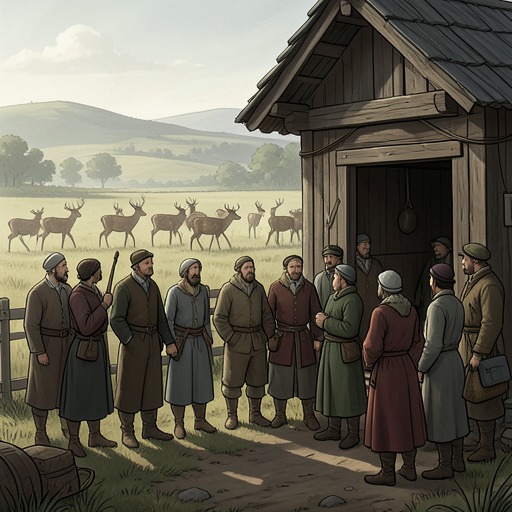
The Oki region is a northern convergence point for nomadic reindeer herders from different areas. People living in its forested mountains are seminomadic: they herd reindeer but supplement that livelihood with hunting. Their way of life places them in sustained contact with Zolian immigrants, many of whom are also reindeer herders. The groups have intermarried extensively, making Oki a place of greater accommodation than the territories shunned by the Ahfal Oma, who continued to nurse a bitter hatred of the Zolians.
This local history belongs to a wider imperial reordering. After Aquafa became a province of the Zolian Empire, its former mountain clans were not automatically recognized as Aquafaese citizens. The Gansa, for example, had once been treated as independent under Aquafa’s king, but Zol refused to recognize the mountain peoples as citizens under its rule. Imperial policy relocated lower-caste populations into conquered territory; without ordinary citizenship, clans risked being removed from their homelands. These distinctions show that frontier rule operated not only through conquest, but through the classification and movement of populations.
Livelihood and Local Knowledge
Oki families rely on reindeer and forest resources, but their animals and seasonal needs do not always fit neatly together. Tohma’s family, already struggling to make ends meet, had to pay a head tax for each reindeer. Taxes were lighter for people with Zolian blood, but that applied only to Kiya and Tohma, offering the household limited relief. Hoping to reduce the burden, Ohma sold some reindeer and tried to raise pyuika, which were taxed less heavily. The effort failed for lack of knowledge and left the family close to disaster.
That gap in knowledge mattered because pyuika could not simply be managed like ordinary livestock. They were wilder than reindeer, resisted restraint, and needed to roam; their keepers had to become familiar to them and form lasting bonds. Van’s upbringing in the Toga Mountains had taught him how to read their habits and guide their movements. He also explained the use of mohoki, a lichen that pyuika avoid: dried mohoki braided into ropes could help contain them, while placing it along their accustomed routes could influence where they travelled. The animals’ needs made practical ecological understanding, rather than mere ownership, essential to raising them.
Tohma’s Family and Van’s Arrival
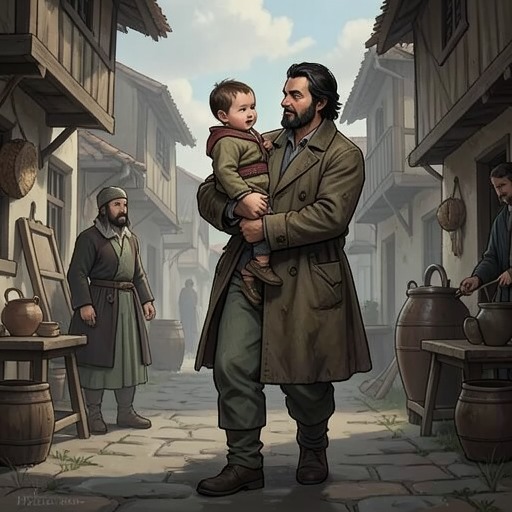
Tohma introduces himself to Van as Tohma yu Oki, “Tohma of the Oki clan,” and asks him to come live with the family. Tsupi, a pyuika Van knows, may be carrying young, and Tohma fears the family will lose her without someone experienced enough to help. His appeal joins the clan’s immediate economic predicament to Van’s particular knowledge: the family needs both Tsupi to calve safely and a workable way to raise pyuika.
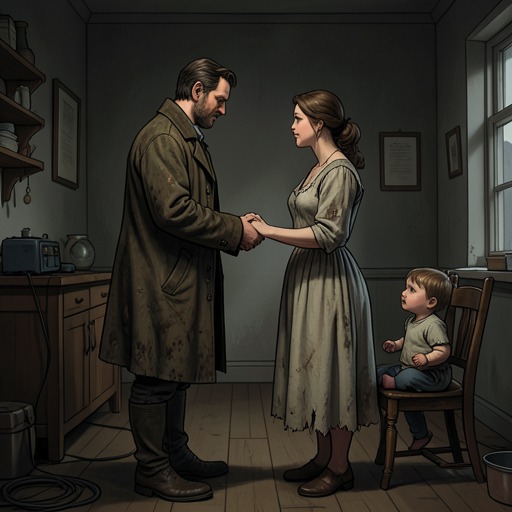
The household’s hardship extends beyond unsuccessful animal husbandry. Tohma’s father, Ohma, had considered asking the wider clan to accept his family into another household, but relying on others carried shame and practical difficulties. Kiya’s relatives lived nearby, yet they too were poor. When Tohma returned from peddling furs with grain, dried fruit, potatoes and beans, his family wept as they handled the food. Van’s arrival offered a different kind of hope: rather than immediately seeking support from the clan, they might learn to sustain themselves through the animals they were trying to raise.
Shared Work and Changing Relations
Van responds by helping prepare for winter, a pressing concern for the household’s young and elderly members. Because Tohma’s injury prevented heavy outdoor work, Van assigned him tasks such as sharpening hunting knives and preparing traps, while Van cut, split and stacked firewood. The work begins as a response to a specific family emergency, but it also puts Van’s skills into service within a community whose members have received him as a needed guest.
The effort expands through Kiya’s kin. When the seasonal migration of reindeer to summer pasture conflicted with the pyuika calving period, Tohma proposed asking neighboring families for help. Kiya’s immediate and distant relatives welcomed the plan: they too had struggled to breed pyuika and wanted to learn from Van. Three of Kiya’s nephews stayed to study the animals’ care while the others took the reindeer to their customary summer pasture; Kiya remained behind to care for Yuna. Van initially found the nephews’ Zolian appearance painful, recalling enemies he had faced, and they in turn followed him through the forest in silence. Yet their arrangement placed instruction and shared labor between communities divided by inherited hostility.
The clan’s relationship to Zolian administration is also shown through the empire’s records. Tax officers collected information about outlying nomadic populations, including those in the Oki Valley and Toga Mountains, and recorded the numbers and ages of people in each group. Such data could help locate people who otherwise remained difficult to find, as well as make populations legible to the tax system. For the Oki clan, as for other frontier communities, administrative attention brought practical knowledge of their existence into the same machinery that categorized and governed them.
Significance
The Oki clan’s story is grounded in the tension between imperial categories and local forms of life. Zolian rule distinguishes citizens from people whose status leaves them vulnerable to relocation, while its frontier settlement policy uses immigrant farmers and herders to transform conquered lands into Zolian communities. At the household scale, tax burdens and precarious resources give those larger policies immediate consequences.
Against that pressure, the clan’s capacity to adapt rests on relationships: between families, across lines of Zolian and local descent, and between people and animals that cannot be managed by force alone. Van’s knowledge helps the Oki family reconsider pyuika raising, and the willingness of Kiya’s relatives to learn turns one household’s crisis into a cooperative undertaking. The clan is therefore presented not as a uniform political category, but as a community negotiating survival through seasonal knowledge, kinship and negotiated coexistence.